Monday, February 10, 2014

End insurance bailout with single-payer system

The Register Guard

End insurance bailout with single-payer system


By Rick Staggenborg


Difficulties with the rollout of the misleadingly titled Affordable Care Act have renewed catcalls from opponents of health care reform who don’t yet realize that some type of reform is inevitable. The previous system was economically unsustainable. Unfortunately, defenders of Obamacare seem unwilling to admit that the ACA isn’t sustainable either. Even Senate Majority Leader Harry Reid admitted as much last Aug. 9, when he said: “What we’ve done with Obamacare is have a step in the right direction, but we’re far from having something that’s going to work forever.” He added that the country has to “work our way past” insurance-based health care. The question is, when do we start? If in defending Obamacare its supporters continue to overlook its serious deficiencies, it could spell disaster for Democrats. When medical costs continue to rise due to the inherentinefficiencies of a for-profit health care system, those who have believed or feared that we cannot afford universal health care will conclude that Republican detractors were right. Having lost credibility, how will Democrats then make the case for a single-payer system? The effect may be seen as early as this year and will certainly be felt by 2016 if Democrats do not start heeding Reid and laying the groundwork for a single-payer system. More importantly, failing to acknowledge the weaknesses of Obamacare would set back the stated goal of the Democratic Party and many of the local Democratic central committees, including those in Rep. Peter DeFazio’s district, of establishing a singlepayer system. From the outset of the debate on health care reform, singlepayer advocates were dismissed with the claim that the “public option” — a government-run plan that would be an alternative to private insurance — was the only thing that was politically possible. Only it wasn’tpossible, for the same reason that those who controlled the debate carefully kept any mention of a single-payer system out of the discussion: The entire process of devising and approving the ACA was controlled by the medical insurance industry. Even if a public option had been achieved despite opposition, it wouldn’t have moved us much closer to single-payer. Sen. Chuck Schumer, D-N.Y., declared early on that any public option would not compete with private insurance. What would be the point, then? It seems clear that the ACA’s main priority was providing a bailout for an insurance industry that was pricing its product out of the market. That is not just speculation, it is simple math. As costs rise, fewer can afford insurance. To maintain profits, the remaining insured have to pay more, leading to fewer being able to afford it. This is the death spiral familiar to anyone who has looked at the economics of our insurance- based health care system. I repeat: 

Obamacare is a bailout for the insurance industry. The reluctance of Democratic leadership to seriously challenge the interests of the medical industrial complex made that inevitable. The subsidies in Obamacare have the effect of temporarily delaying the ultimate demise of the medical insurance industry at a tremendous cost to taxpayers, who were not told an option exists that costs about half as much per person and would cover everyone. Until Obamacare is replaced with a single-payer system, costs will mount and anger will grow among those who were told that it would save money. The glowing Congressional Budget Office report touted by the Obama administration concluded that even under the rosy assumptions it was forced to make, savings would amount to only 0.5 percent of gross domestic product — while total health care costs are more than 17 percent of GDP. Bending the cost curve, as is claimed to be a result of the ACA, just means slowing therate of growth in health care expenditures. The total is still going up. Only a single-payer system will bend the cost curve sharply downward. We are already seeing conservative commentators picking up on the fact that Obamacare is a bailout. In an interview with Fox news in late December, analyst Byron York made that very argument. Less than two weeks later, ultra-right-wing columnist Charles Krauthammer made the same point. Democrats will dismiss them at their own peril, because they are telling the truth. Opponents won’t get the ACA repealed, but they will generate a lot of anger toward Democrats, and the chance to have a real debate about health care reform may be lost for a generation.

Rick Staggenborg, M.D., of North Bend is a member of Physicians for a National Health Program, but the opinions expressed here do not necessarily reflect the opinion of the organization.

Saturday, February 8, 2014

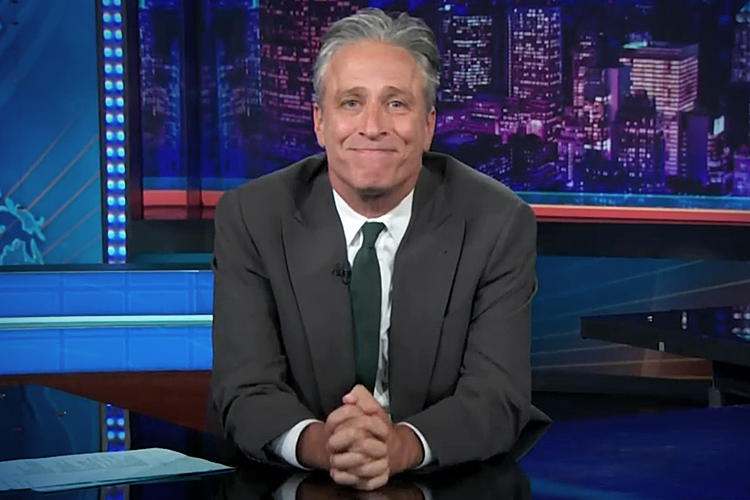
Jon Stewart will save us! The future of healthcare may rest with “The Daily Show”

SALON


Jon Stewart will save us! The future of healthcare may rest with “The Daily Show”


If America is ever to have a real single-payer healthcare system, it might be thanks to the "Daily Show" host


Jon Stewart will save us! The future of healthcare may rest with  
Jon Stewart (Credit: Comedy Central)
 
 
As a 12-year-old suburban kid, “The Daily Show” opened my mind and won my heart. It was an odd favorite, because I otherwise avoided politics. The cathartic laughter over revelations of American hypocrisy and that calming moment of zen at the show’s end made it possible to learn about our government’s failures while staying optimistic. I never thought I’d someday be 26, still watching “The Daily Show,” and struck by this idea: Jon Stewart will help save America’s health care system.

When Stewart is not interviewing Scarlett Johansson or Johnny Knoxville, he’s building a strong case for why we must fight for a truly humane, affordable health care system – a single-payer universal health care system that substantially upgrades Obamacare. Thanks in part to guests like Johansson and Knoxville, “The Daily Show” is a megaphone reaching the key 18 to 49 age demographic; it ranks first in all of current late-night TV for winning our age group’s hearts and minds.

Back in October 2013, the U.S. Secretary of Health and Human Services, Kathleen Sebelius, appeared on the show to sell us whippersnappers Obamacare insurance. Obamacare depends on young, healthy folks to enter into its marketplace and balance the costs of older and sicker citizens.

“Young people,” said Sebelius, “are one fall on the basketball court, one auto accident away, from a lifetime of hospital bills they can’t pay.”

Sebelius’ nudge felt almost endearing, like the effort of a concerned mother to protect her kin. But one must ask, how reformed is Obamacare if it will leave any of us or our loved ones vulnerable to “a lifetime of hospital bills” we “can’t pay”?

“We don’t get to pick and choose when we get sick,” Sebelius continued. “You’re more likely to live sicker and die younger without insurance.”

“Exactly,” Stewart said and spiked the conversational volleyball, “which is why I don’t understand the idea of staying with a market-based solution for a problem where people can’t be smart consumers.”

Stewart’s televised argument for single-payer grows stronger every day. In a Jan. 16 interview on “The Daily Show,” writer Steven Brill exposed Obamacare’s failure to control health care costs and bloated CEO salaries. Brill is the journalist behind the 2013 Time article “Bitter Pill: Why Medical Bills Are Killing Us,” which reveals how 60 percent of personal bankruptcies are due to medical bills. Most of these bankruptcies fall on the backs of ordinary, unsuspecting Americans with insurance.

“So what this new system does is bring more people into this deteriorating building,” Stewart said provocatively.

In countries with single-payer, such as Canada and the U.K., not one single citizen ever goes bankrupt over medical bills. People live longer and pay less, covered from cradle to grave under single-payer’s founding principle: health care is a human right.

“There must be a way for government to earn back the trust of the people,” Stewart said as he kicked off his interrogation of House Minority Leader Nancy Pelosi on Jan. 30.

“Public sentiment is everything,” Pelosi deflected.

Pelosi is right about people power, and “The Daily Show” is part of that equation.

“Single-payer,” Stewart had said to Sebelius, “simplifies this whole gobbledygook and creates the program that I think America deserves.”
He then stood up, placed his hand to his heart, and sang “Proud to Be an American.”  The studio audience howled, cheered and applauded in a showing of great “public sentiment.” Just imagine when Stewart’s 1.6 million nightly viewers hit the streets with a rallying cry and do the same.

Wednesday, February 5, 2014

Report Fuels Obamacare Debate With Estimates of Job Loss


The non-partisan Congressional Budget Office gave new fuel to the debate over the Affordable Care Act Tuesday with its estimate that the law will lead to the eventual loss of about 2.5 million full-time jobs.

In its annual budget and economic forecast the agency also said that the ACA or Obamacare will reduce the total number of hours worked by about 1.5 percent to 2 percent from 2017 to 2024.

Even though total employment will increase over the coming decade, the CBO said, “that increase will be smaller than it would have been in the absence of the ACA.”

CBO director Douglas Elmendorf told reporters that the analysis done by his agency’s experts “led us to conclude that the effect of the Affordable Care Act on labor supply would be a good deal larger than we had thought originally.” In 2011, the CBO estimated the loss of full-time equivalent jobs due to the law would be about 800,000.

Elmendorf also told reporters that the employer mandate – the requirement that firms offer health insurance to workers– “will reduce the demand for labor in the short term because employers face this extra cost. It is analogous in some ways to raising the minimum wage.”

The CBO report said that “workers will choose to supply less labor—given the new taxes and other incentives they will face and the financial benefits some will receive.”

Both sides of the Obamacare debate used the new findings to buttress their arguments, with House Speaker John Boehner saying that Republicans had argued for years that “the president's health care law creates uncertainty for small businesses, hurts take-home pay, and makes it harder to invest in new workers. The middle class is getting squeezed in this economy, and this CBO report confirms that Obamacare is making it worse.”

But Obama spokesman Jay Carney said the CBO analysis was incomplete. The budget office, he said, did not take into account the beneficial effect of slower health care cost growth due to the ACA, “Experts have estimated that slower growth in health costs due to the ACA will cause the economy to add an additional 250,000 to 400,000 jobs per year by the end of the decade,” he said. “Moreover, CBO does not take into account positive impacts on worker productivity due to the ACA's role in improving workers' health, including reduced absenteeism.”


Tom Curry

Tom Curry has served as political correspondent for msnbc.com since July 1996, covering congressional and presidential elections from Lake Okoboji, Iowa, to Lake Winnipesaukee, N.H.

Friday, January 31, 2014

Millions Are Now Realizing They're Too Poor For Obamacare


business


Millions Are Now Realizing They're Too Poor For Obamacare

 
Posted:


Thanks to a Supreme Court ruling and staunch Republican resistance, Marc Alphonse, an unemployed 40-year-old Marine veteran who is essentially homeless, cannot get health insurance under Obamacare.

Three years ago, Alphonse learned he has a kidney disorder that will deteriorate into kidney failure, and possibly prove fatal, if left untreated. As it stands now, he suffers from bouts of nausea caused by his dysfunctional kidneys, and he's dogged by an old knee injury that limits his job prospects. He gets by on $400 a month in unemployment benefits, and his family can no longer afford housing in their home city of Miami. Alphonse's 28-year-old wife, Danielle, and three young children are staying with relatives while Alphonse couch surfs.

"I live from family to family until I'm able to get myself situated," he told The Huffington Post.

Alphonse is one of nearly 5 million uninsured Americans caught in a cruel gap that renders some Americans "too poor for Obamacare."

Broken Promise

Obamacare was supposed to make health coverage affordable, or even free, for low-income Americans. The law's official name is the Affordable Care Act. However, the Supreme Court tossed a huge obstacle in the path of that goal in 2012, ruling that the states could opt out of one of Obamacare's crucial provisions: The expansion of Medicaid coverage to anyone making less than 133 percent of the federal poverty level, or about $15,300 a year for a single person. Since the court's ruling, 24 states, including Florida, chose not to expand the program.

Under the pre-Obamacare rules, eligibility for the program typically was limited to low-income children, pregnant women, parents caring for children at home, and adults with disabilities. Without the law's expansion, an adult without a disability who isn't living with their children -- like Alphonse -- doesn't qualify for Medicaid, no matter how poor he or she is.

For those who don't qualify for Medicaid coverage, Obamacare offers tax credits for private health plans sold through the law's health insurance exchange marketplaces. But those subsidies are available only to those making between the poverty level, or about $11,500 for an individual, and four times that amount. In states not expanding Medicaid, people who earn less than poverty wages get nothing.

In Alphonse's case, his family is trying to survive on his unemployment insurance. It amounts to $4,800 a year -- far below the poverty level, which is $27,570 for a family of five. Even the unemployment benefits will run out in March.

'People Break Down In Tears'

Florida Gov. Rick Scott (R) launched his political career in 2009 as a health care reform antagonist. Originally, he opposed the Medicaid expansion, but he then changed his mind. Last year, Scott and the majority-Republican state Senate backed a plan to accept federal dollars to expand the program. The GOP-led state House of Representatives refused to go along.

Now, 764,000 low-income adults in Florida will remain without insurance because of the coverage gap, according to the Henry J. Kaiser Family Foundation. And they're beginning to understand the tragic consequences of that public battle. At Miami's Borinquen Medical Centers for low-income and uninsured patients, Jason Connor sees hopes crushed as people who thought Obamacare could help them at long last learn otherwise.

"We've had people break down in tears at our desk," said Connor, who is under contract with the community health centers to do Affordable Care Act outreach and enrollment activities through his company, Choice Returns.

Seventy-eight percent of the 50,000 patients that Borinquen Medical Centers treat every year are uninsured, Connor said. About 20 percent of those who visit their facilities looking to apply for benefits fall into the coverage gap, he added.
"Folks are frustrated and they're angry, and they'll curse at you even though you have nothing to do with it," he said.

GOP Revolts

When the Supreme Court ruled that states could opt out of the Medicaid expansion, Florida, Texas and nearly the entire South turned away billions in federal dollars offered for broadening the program, citing budgetary concerns and resistance to Obamacare itself. The federal government will pay the full cost of the Medicaid expansion through 2016, after which its share will be no less than 90 percent.

These decisions by governors and legislators essentially consigned a huge swath of the very poor to a life of extreme insecurity.

"It's very frustrating," said Alphonse, who last worked as a security guard until being laid off 10 months ago. "It's kind of odd where an individual that has an opportunity to help millions of people in their own state, and they just totally refuse to do it."

Florida's legislature is poised to take up the Medicaid expansion again during this year's session, but the political dynamics don't appear to have changed much since last year. Meanwhile, one-quarter of Florida's population (under the age of 65) is without health insurance -- the second-highest of all the states behind Texas. In Miami-Dade County, where Alphonse lives, the uninsured rate was an astonishing 34 percent in 2011, the most recent year county-level data were available.


Where Are The Uninsured? florida medicaid uninsured This map shows the percent of uninsured in each U.S. county in 2011. The data includes all incomes, races, and both sexes for people under age 65. Source: U.S. Census Bureau


'I Just Try To Live Every Day'

Unable to afford medical care or insurance, Alphonse hasn't followed up on the warning he received about his kidneys from a doctor treating a knee injury he suffered in 2011 while working as a security guard. Alphonse was told he needed to see a kidney specialist and start getting treatments, or he'd risk the condition worsening to the point he'd need dialysis or a transplant.

"It's extremely scary, but I try not to think about it. I just try to live every day because it's what you have to do to survive," Alphonse said.

A few years ago, Alphonse broke his hand and faced a $1,000 emergency room bill that destroyed his credit. He's afraid to rack up medical bills now. Even copayments as low as $20 at community health centers, which charge low-income patients on a sliding scale, are unaffordable, he said. He's applying for health benefits through the Department of Veterans Affairs, but he may not meet the program's eligibility rules.

While hospitals can't turn away patients in need of emergency treatments, they aren't required to provide the kind of comprehensive care needed for someone with a serious medical condition.

"If you're really sick, you can fall through the cracks of the safety net system," said Lise Federman, a health policy specialist at Florida Legal Services in Miami. "People who have chronic conditions who need specialist services do suffer." (Florida Legal Services referred HuffPost to Alphonse.)

Taxpayers Still Foot The Bill

Keeping people like Alphonse off the Medicaid rolls doesn't shield American or Floridian taxpayers from the cost of whatever treatments he eventually may receive, like at a hospital emergency room or a government-funded community health center. Unpaid medical bills totaled $57.4 billion in 2008 -- and taxpayers picked up about three-quarters of the tab, according to a study published in the journal Health Affairs. Expanding health coverage via Obamacare was supposed to reduce that burden, but the patchwork Medicaid expansion limits the law's reach.

And if Alphonse's condition deteriorates into what's known as end-stage renal disease, or permanent kidney failure, he automatically would qualify for Medicare coverage paid for by the federal government. Although Medicare mainly is for people over 65 or those with disabilities, people who need dialysis or a kidney transplant are eligible under a special rule enacted in 1972.

For those too poor for Obamacare in Miami, watching neighbors who make more money receive subsidized health insurance makes the experience even more painful, said Mayte Canino, a field and volunteer coordinator for Planned Parenthood of South Florida and the Treasure Coast. Uninsured people are skeptical of Obamacare and unaware of many provisions, and only 49 percent know that states have the option to expand Medicaid, according to a poll conducted by the Kaiser Family Foundation this month.

"That even affects them more, when they see that other people are getting help and they're not," said Canino, who helps people sign up for insurance. "Many of them are very unhappy. They blame the law, some of them, for it. They just walk away from it, and they think that's it. They're defeated."

HuffPost Readers: Did you try to sign up for health insurance coverage, but were told that you're not eligible for Medicaid because your state didn't adopt the program expansion, and you make too little to qualify for help paying for private insurance? We want to hear from you. If you're willing to discuss your health care with a reporter, email us here, and tell us if you're facing any medical issues, what your current coverage situation is, and what Medicaid coverage would have meant for you. Please let us know the following information: your name, your age, your city, and whether we have permission to quote you by name. Please enclose a photo if you're willing to have one published.

Tuesday, January 28, 2014

Consumers With Canceled Insurance Plans Shifted to New Ones Without Their Permission

ProPublica


Consumers With Canceled Insurance Plans Shifted to New Ones Without Their Permission

.
The Anthem Blue Cross headquarters in Woodland Hills, Calif. Pharmacist Kevin Kingma says the insurer rolled him into a new plan and deducted money from his bank account without his approval, a problem hundreds of consumers say they're having. (David McNew/Getty Images)


When California pharmacist Kevin Kingma received a letter last fall notifying him that his high-deductible health plan was being canceled because of the Affordable Care Act, he logged into his state’s health insurance exchange and chose another plan beginning Jan. 1.

Thanks to a subsidy, Kingma’s monthly premium went down, from about $300 to $175, and his benefits improved.

But this month, Kingma logged into his bank’s website and saw that his old insurer, Anthem Blue Cross, had deducted $587.40 from his account and had enrolled him in another of its insurance products for this year -- he says without permission.

Hundreds of other consumers are caught in the same predicament, insurers acknowledge. And the California Department of Insurance said it is exploring whether any laws were broken when insurance companies withdrew money from consumers’ accounts for plans they didn’t select.

Here’s what happened to Kingma and others: When they received letters last fall, they were informed that their plans had been canceled. But within the letter, it also said that if they did nothing, they would be switched over to a different plan and if they had set up their payment to autodraft from their account, it would continue to do so.

Kingma said he didn’t read the whole letter, just enough of it to know his old plan was being canceled.

Once he noticed the withdrawals from his account this month, Kingma said he tried calling Anthem’s customer service hotline but couldn’t reach anyone because of “high call volume.” Dozens of consumers have reported long phone waits trying to reach Anthem.

Kingma then repeatedly faxed and contacted the insurer through its website. An Anthem representative first told him that he may only receive reimbursement for about half of January, until the date he actually canceled the new policy. Since then, it appears the insurer canceled his policy at the end of 2013. But as of Friday afternoon, it hadn’t refunded Kingma’s money, he said.

“I and a number of other former Anthem policy holders are stuck in Anthem's Kafkaesque nightmare as part of healthcare reform,” Kingma, 57, wrote to me in an email.

Darrel Ng, a spokesman for Anthem Blue Cross, said in an email that insurers across California had moved members from canceled plans to new ones that comply with the law “and that transition retained their payment preference.
“In cases where members neglected to inform insurers that they had selected a new plan or informed insurers too late that they had selected a new plan, members are receiving a full refund for any amount paid.”

Kaiser Permanente spokesman Chris Stenrud confirmed that his insurer has also found cases similar to Kingma’s.

“Unfortunately, about 500 of our existing members in California who had automatic payment set up for their current plans were inadvertently charged before our systems recognized their enrollment in new plans through Covered California,” the state’s exchange, he wrote in an email. “We have identified the affected members and are in the process of contacting them to make them aware of the mistake, and of course, our commitment to refund the extra charge.

“We take this seriously, and want to assure our members that we will make them whole,” he wrote.

These actions may not fully satisfy the California Department of Insurance. Janice Rocco, deputy commissioner for health policy and reform, wrote in an email that insurers have cooperated with her agency and refunded premiums when questions arose, so “we hadn’t been focused on what the potential legal violations might be.”

She said insurers may have violated the law in two ways by deducting funds from customers’ bank accounts electronically. “Moving a policyholder from one product to another would be considered a ‘material change’ that would trigger a requirement in law to provide information about how to cancel the electronic funds transfer agreement. We did not see any notice of how to cancel an electronic transfer of funds in the policy cancellation notices, so there may be some violations of law in this regard.” 

Beyond that, Rocco said, some of the new products used by two health insurers were technically “sold by one of the insurer’s affiliated companies with which that policyholder had no prior electronic funds transfer agreement, so that might be another area of potential legal violations,” she wrote.

It isn’t known whether similar complaints have been lodged outside of California. But insurers in a number of states sent consumers letters saying they would be moved to new plans unless they said otherwise. (This letter was posted online by Politifact.) The Associated Press reported last month that at least 4.7 million people were told their old health plans were going away because they didn’t meet the coverage standards of the Affordable Care Act.

In the meantime, consumers have taken to Twitter to voice their frustration.

Thursday, January 16, 2014

Hackers: HealthCare.gov still riddled with potential security issues

Nbc News Technology


Hackers: HealthCare.gov still riddled with potential security issues


17 minutes ago 


Cybersecurity researchers slammed HealthCare.gov's security during a House hearing on Thursday morning, saying the site is still riddled with problems that could put consumers' sensitive health details at risk.

“The reason we’re concluding that this is so shockingly bad is that the issues across the site are so varied,” David Kennedy, founder of the information security firm TrustedSec, told NBCNews.com. “You don’t even have to hack into the system to see big issues – which means there are [major problems] underneath.”

Kennedy was the first of a group of so-called "white-hat hackers" who testified before the House Science Committee on Thursday. He previously appeared before the committee on November 19, when he said he was able to identify 18 major issues with the site – without even hacking into it.

“Nothing’s really changed since our November 19 testimony,” Kennedy said during the hearing. “In fact, it’s worse.”

Only half of one of those 18 issues on HealthCare.gov has been fixed since that November meeting, Kennedy said, and he has since learned of more problems with the site. A separate House Oversight committee hearing began Thursday morning with testimony expected from the Department of Health and Human Service's chief information security officer.

TrustedSec isn’t disclosing the specifics of how those vulnerabilities work, as they are active issues that hackers could exploit. But Kennedy did cite issues including the disclosure of user profiles and the “ability to access anyone’s eligibility report on the website without the need for any authentication or authorization.”

“Some issues still include critical or high-risk findings to personal information or risk of loss of confidentiality or integrity of the infrastructure itself,” Kennedy said in his written testimony. He also submitted statements from seven other security researchers who expressed serious concerns.


(FILES)This December 2, 2013 file photo shows a woman reading the HealthCare.gov insurance marketplace internet site in Washington, DC.  President Bar...
KAREN BLEIER / AFP - Getty Images file
Since the Affordable Care Act, or "Obamacare", was passed in 2010, the legislation has survived multiple repeal attempts by Republican lawmakers, a US Supreme Court hearing, and a disastrous rollout of the website set up to assist the launch of the legislation. 
The committee, which is chaired by Lamar Smith (R-Tex.), also heard testimony from Michael Gregg, the CEO of security consulting firm Superior Solutions.

Gregg discussed concerns about Healthcare.gov “going up fast,” comparing the process with those of private companies like Microsoft, which roll out products in waves and spend a lot of time testing them. Healthcare.gov didn’t follow that type of process, he said, and the data it contains is a goldmine.

“Hacking today is big business,” Gregg told the committee. “It’s no longer the lone hacker in the basement.”

It’s possible to fix the problems, Gregg said, but he stressed the need for “an independent assessment of the site.”

Another security researcher, who was not a part of the committee hearing, was not as optimistic.

“If you build a house on a bad foundation and it’s sinking into a swamp, it’s really hard to pick up the house and rebuild the foundation,” said Alex McGeorge, a senior security researcher at Immunity Inc. Companies hire Immunity to hack into their own systems and show vulnerabilities.

“Security isn’t a bolt-on,” McGeorge said. “It’s not easy to retrofit once you have a system up and running.”

McGeorge agreed with Gregg’s assessment of Healthcare.gov as “hugely enticing to hackers,” however.

“They’re hawking [Healthcare.gov] as an insurance hub, the place where you can find everything – and that’s exactly why it’s so attractive to hackers,” McGeorge said. “You get into the site, and the fun doesn’t stop there.”

This week the Obama Administration booted the original IT contractor, CGI Federal , that managed Healthcare.gov. CGI Federal’s contract will not be renewed in February, and Accenture won the contract instead.

“From a security standpoint, one of the things that’s so interesting about this site is that it’s so dynamic -- and it’s changing quickly,” McGeorge said. “You’ve got so many hands in the pot.”

Unfortunately, “that is the exact opposite of how you create a secure site,” McGeorge said. When new developers come in to save the day, working quickly to fix issues.

There’s also an upside to the ever-changing nature of Healthcare.gov and its stewards: When the site is constantly shifting, it’s tougher for hackers to exploit vulnerabilities they found previously.

“It’s harder to hit a moving target,” McGeorge said. “But a moving target also makes more mistakes.

Tuesday, January 14, 2014

Closing the Donut Hole – 25% to All... or Not

HVS Financial


Closing the Donut Hole – 25% to All


There has been a lot of talk about the closing of the “Donut Hole” in the last year and this mainly due to the new “Patient Protection and Affordable Care Act (PPACA)” which passed in 2010. This one act has effectively closed the drug gap by the year 2020..

This is great news as one of the biggest issues with Medicare Part D is this Donut Hole and on the surface it appears to be solved. But with an action there is always a reaction and let’s look at how all of this plays out.

(For an even bigger issue see our article – “Medicare’s Tier 4“)

What the “Donut Hole” is as defined by www.medicare.gove is “a temporary limit on what the drug plan will cover for drugs. Not everyone will enter the coverage gap. The coverage gap begins after you and your drug plan have spent a certain amount for covered drugs”.

The amount in 2012 that needs to be spent on drugs is $2,930, it includes everything that is spent by the beneficiary and the insurer. Once at this amount the beneficiary is defined as being in the “Donut Hole” and is now responsible for 100% of all drug costs.

There is some relief though, for those that reach the “Donut Hole” they will receive a 50% manufacturer-paid discount on covered brand-name drugs along with a 7% discount on all generic drugs too. They will also receive a $250 rebate just reaching this gap.

While in this gap the beneficiary is own their own until a total of  $4700 is spent. After this amount is spent catastrophic coverage then kicks in and the beneficiary will have a 5% co pay while the insurer picks up the rest of the tab for the remaining part of the year.

Again, this is great news, over the next few years the Donut Hole will go away and beneficiaries will no longer have to worry about this gap in coverage. The new legislation on the books calls for a bigger discounts on drugs for those in this gap until there is no cost to the beneficiary.
Ultimately, the 3.4 million people who reach the Donut Hole each year will no longer have to worry about that large cost by 2020 but here comes some bad news – the other 27.5 million that have some form of Medicare Prescription Drug insurance who never reach the “Donut Hole”,  they will now be stuck paying 25% on all drugs.

Yes, by 2020 the Donut Hole will be closed and it will be replaced with a 25% costs sharing across the board for all brand name & generic drugs – for those that never reached the “Donut Hole” they will now see their overall drug bill increase starting in 2020.

About Dan McGrath

Dan McGrath, is the Director of Healthcare Funding Strategies at HVS Financial. HVS Financial, one of the only firms in the country that has developed unique yet practical software that assists investors and financial professionals in projecting what expected health care costs will be in retirement.

Contact information;
978-539-8134
dmcgrath@hvsfinancial.com